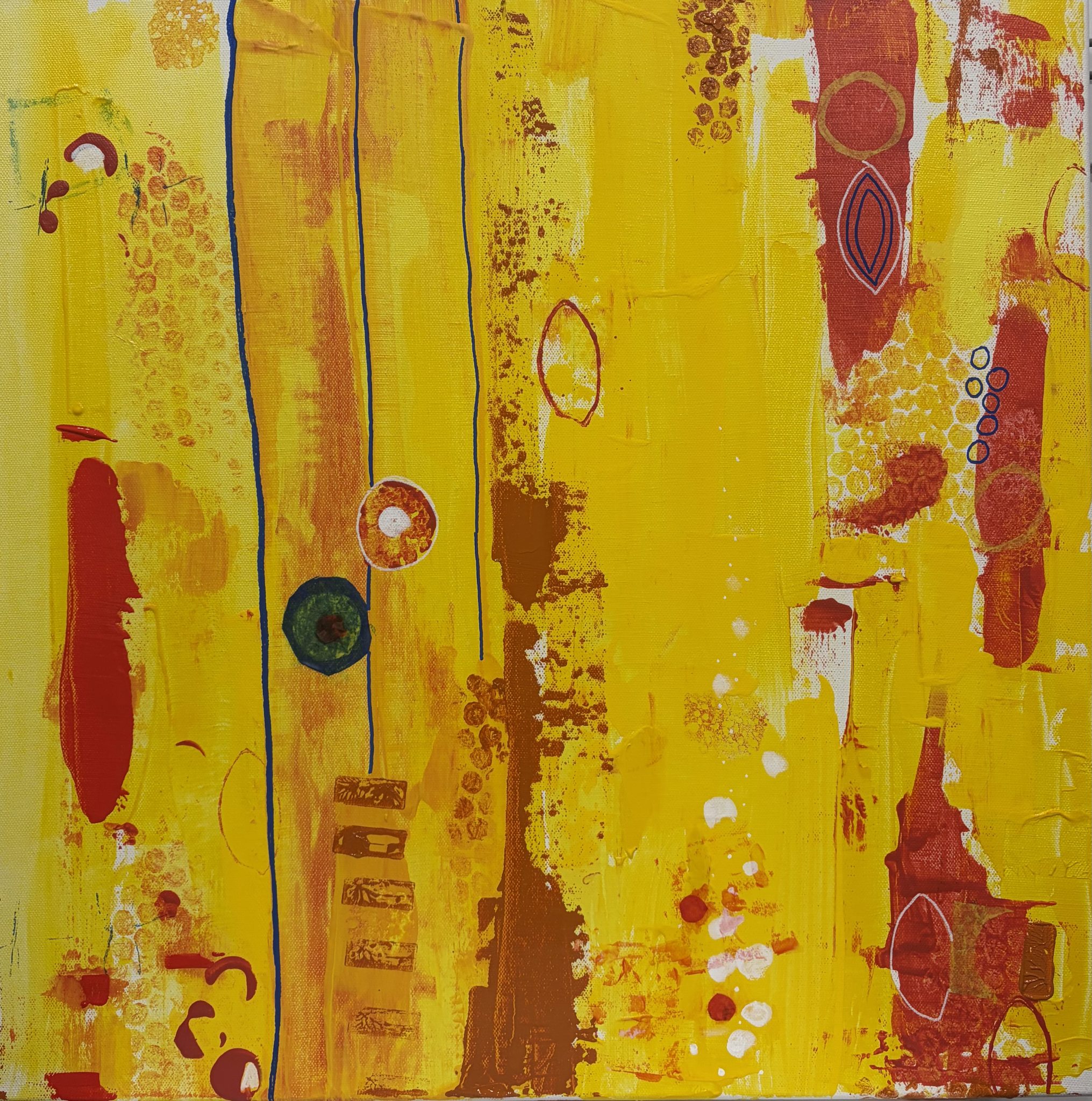
Primary playground

Primary red, yellow, blue, acrylic, bubble wrap, palette knife, elements, linesI love how this piece turned out. My intention was to play with the three primary colors, yellow, red, and blue. I felt happy and energetic when I started working on it. I began early one morning, before the school or workday began, by applying some yellow acrylic paint. That was all I did at first, and then I left it alone.

Every day or every other day, I pushed myself to go down to the basement and take out another color. I would spend just ten or twenty minutes at a time working on it. I’d go while dinner was simmering on the stove or while waiting for Amir to come home. I added some red and experimented with mixing it with the yellow, creating different marks. I used bubble wrap and a palette knife, allowing my instincts to guide me. Then, I would leave it alone for a while, thinking about it occasionally. I’d go downstairs when I had a chance to look at it without adding anything new.

This was definitely a slow process, with no pressure and no specific goal or destination in mind. What I truly enjoyed was the journey and the patient waiting to see where it would take me. For a couple of days, I knew I wanted to add blue. I envisioned blue as my accent color, technically, my “10 percent” color! I’d go down and gesture my hand up and down, without any paint in my hand, waiting for something to guide me to the perfect spot for that blue. It almost felt like I had a metal detector, waiting to find the ideal place to drop that blue color down. It took me a while actually and thats normal and these days I embrace it. I used to feel that I had to know exactly where my piece was going as soon as I picked up a blank canvas. That’s far from the truth. Understanding this makes the process of creating art less anxiety-filled and more organic, something that just happens naturally. In the end I decided to use my blue Posca pen. I love these pens and they are so fun to use. I added vertical blue lines along the yellow brushstrokes. Some little circles and leaf shaped lines. I also cut a piece of blue tissue paper into a circle and a yellow one and layered them down with some collage glue. I also added some unexpected brown paint at the end I used some old stamps I had created with a circular cut out sponge and one was a little rectangular piece of wood you can see I stamped looks like little rectangular stepping stones. All of these little marks and strokes were unplanned and unexpected, like going to a playground all by yourself and then other people show up and you all start playing together and have the best time! Again, I wish I had taken more pictures of this process, but part of this process is the spontaneity of me randomly going down to the basement and not having the pressure to perform. There’s one more piece I want to create to finish up this series.
20×20 Mixed Media Acrylic Canvas

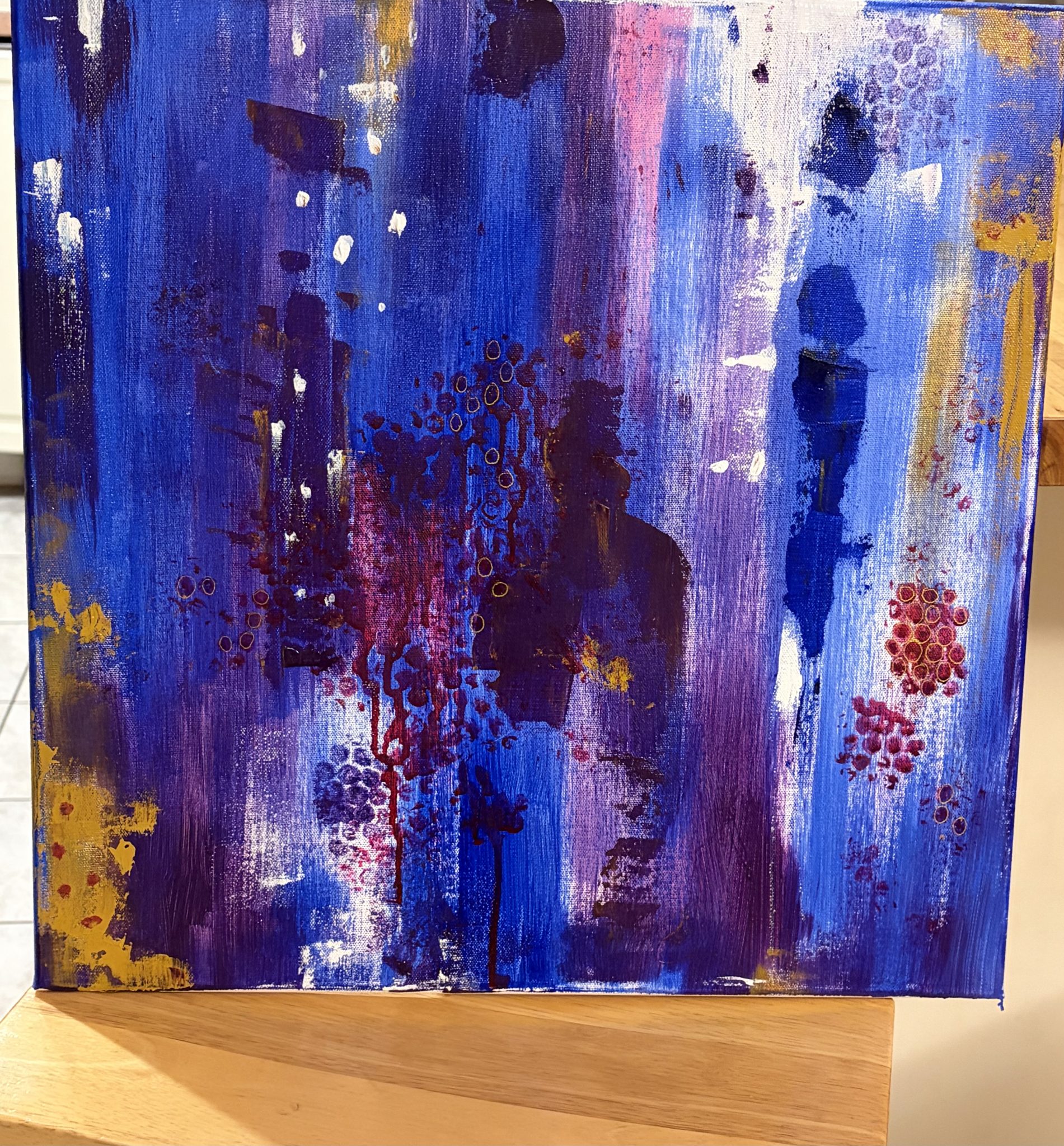
I have one piece with yellow as my base color, one with blue, and I am considering using red as my next base, but I’m not sure yet. Or maybe green? Showing the journey of yellow and blue mixing together? We shall see!


The Art of Transformation: Lessons from My First Mixed Media Canvas

I love being a witness to transformation. I’ve recently been paying attention to my own transformation into becoming more artistic. It’s similar to the transformation of the pieces I’ve been painting. I start with a blank canvas, and then I start with a light layer, then another, and another, then I add a mark or a gesture. More color, lines and other elements that give it more balance. All the while I’m discovering that this is similar to human transformation. We are just layers of days and years that have past. If you were able to tear the layers down you will find where you first began. Its so easy to forget that first layer. The most basic, the starting point. Every day others see us and sometimes we look finished, but they dont know what we were like before that last layer and they might not like the next layer we add on.

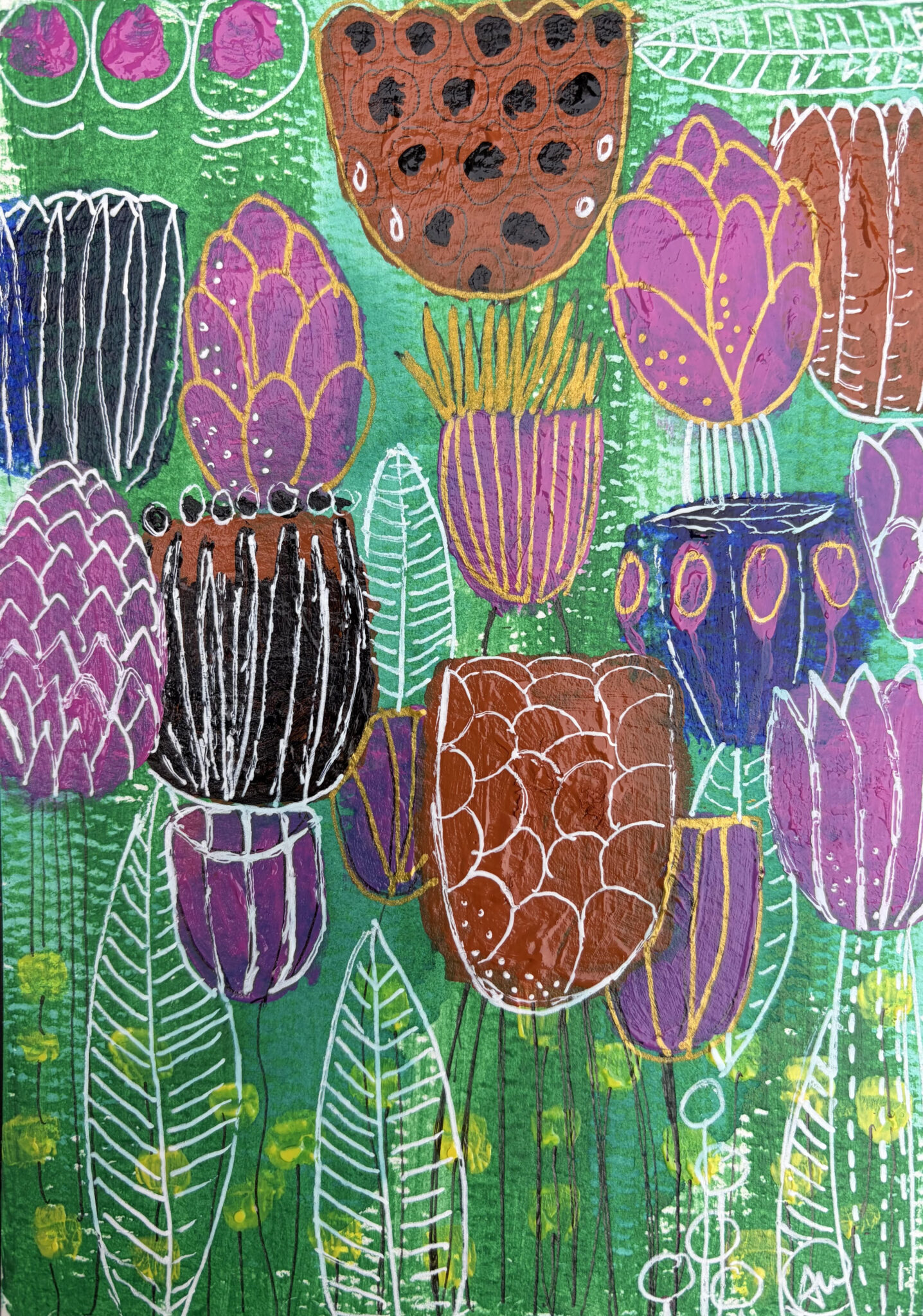
Vibrant green mixed Media painting with layered organic flower pods, tropical leaves, and detailed white line work.

My finished mixed Media canvas, featuring vibrant greens, botanical pods, and white ink details.

Others see us and sometimes perceive us as finished, but they often don’t recognize what we were like before that last layer, nor do they know how they might feel about the next layer we add on. Just like in art, our growth is inspired by other artists and techniques, similar to how we develop as individuals. As children, we absorb influences from the people around us, and pieces of them become entwined within us, much like an artwork we create.

With these thoughts on transformation swirling in my mind, I stared down at my very first mixed-media canvas. It was intimidating to make that first mark, but I reminded myself that every mistake would just become a hidden, beautiful layer of the final piece.

Through the pieces I’ve created, I’ve witnessed how we can change from ugly to beautiful, from quiet to loud. We can improve, we can transform. This process gives me insight into the lives of others and how the surface we see does not always reflect who they have been. They have changed, they too possess layers we haven’t seen. How did they reach this point? What experiences shaped them along the way? Were there spills and splatters, bumps and holes? Transformation is beautiful to observe, it is both messy and magnificent.

It’s funny, or perhaps surprising, when I look at this piece. I find myself thinking, “How did it get here?” I can’t believe I created this. It was entirely unplanned and stemmed from an intuitive process. I began with a blank piece of 5 x 7 watercolor paper and decided to keep some acrylic paints in my dining room for spontaneous painting opportunities. The green tube caught my attention, so I squeezed some paint onto my tray and started applying it as a background. It felt almost as if my hand glided up and down the page without any specific intention, simply moving freely. I allowed the paint to fall wherever it wanted. In the spots that remained white from the brush not having enough paint on it as it made its way up and down, I decided to open up my watercolors and add a variation of greens and yellows over the green acrylic paint.

The background felt so alive. The next most natural step that pulled me was to add pops of color through some organic shapes. I played with different shapes, textures, and earthy tones—deep browns, plums, and vibrant magentas. Some shapes got a solid coat of opaque paint, while others received intricate patterns, like the brown pod with scale like textures right in the center.

This is where the true magic happened, and the piece began to come together. I used paint pens and fine brushes to add white and gold line work over the dry blocks of paint. I traced the outlines of the petals, etched delicate veins into the green leaves, and added tiny whimsical dots.

I am so proud of this piece. I felt as if I was in a trance, and I don’t think I could recreate it, even if I wanted to. I really enjoyed this process; it was freeing and relaxing. I can honestly say I was completely lost in the moment. I think I might add some final touches, but it feels pretty finished to me.